




Fixed income: From Riyadh to Dublin, the hunt for resilient Shariah returns
- Asia Pacific leads with US$5.63 billion in total fund assets
- Saudi Arabia remains the global titan for fixed income
- African region shows market potential, defined by a vibrant but localized landscape
Fixed income funds remain a primary draw in the Shariah universe, especially with the inclusion of versatile Sukuk structures, attracting investors who prioritize resilient, ethical returns.
This growth is supported by a widening array of instruments, including Murabahah deposits and Islamic securities, which sovereign entities in the GCC and Malaysia increasingly utilize for government financing and market development.
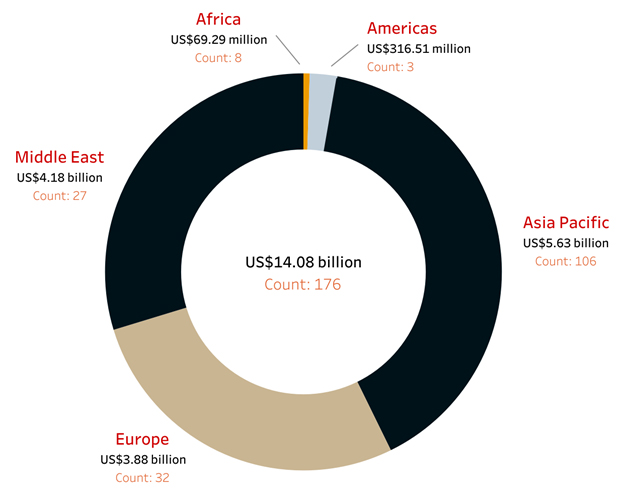
The IFN Investor Funds Database currently tracks 176 Shariah compliant fixed income funds, representing a combined US$14.08 billion in AuM, spread across five regions of the Asia Pacific, the Middle East, Europe, the Americas and Africa.
Chart 1: Shariah fixed income assets by region, AuM and fund count
Global asset spread
Asia Pacific: This region remains the primary engine of global Shariah fixed income funds, commanding US$5.63 billion in total AuM distributed across 106 funds tracked by the IFN Investor Funds Database. Assets also grew 8% between Q3 and Q4 2025. This geographic stronghold owes its prominence to a sophisticated regulatory environment and a deeply rooted ecosystem for Sukuk, largely anchored in the Muslim-majority hubs of Southeast Asia.
Regionally, Malaysia remains the sector heavyweight, serving as the domicile for 24 funds with a combined capitalization of US$3 billion. With its disproportionate influence as the world’s most advanced Islamic investment hub, Malaysia also sets the benchmark for how domestic regulatory support can translate into global leadership in the fixed income space.
In contrast, Indonesia presents a narrative of untapped potential and growing retail participation. While it houses the world’s largest Muslim population, its fixed income segment is currently characterized by a smaller footprint compared to its peers, yet it remains a pivotal force in the region’s overall growth strategy.
Middle East: This region continues to serve as the structural anchor of the global Islamic finance landscape, acting as a powerhouse for fixed income instruments through its deep integration of sovereign capital. The region currently manages US$4.18 billion in assets across 27 individual funds tracked by the IFN Investor Funds Database.
Saudi Arabia stands as the undisputed titan of the Gulf and the top-performing domicile for Islamic fixed income globally. The Kingdom hosts 22 funds with a combined capitalization of US$3.87 billion. This dominance reflects aggressive efforts to deepen capital markets under the Vision 2030 agenda, catering to a vast domestic base while positioning Riyadh as a global financial hub.
Despite its deeply entrenched status, the Middle East presents a unique structural paradox defined by significant fragmentation across various national regulatory regimes. This internal complexity, combined with broader market volatility, led the region to experience a decline of 12.13% in AuM between Q3 and Q4 2025.
Europe: Unlike the retail-driven markets of Asia, the European model is defined by its lean institutional architecture, prioritizing large-scale vehicles over a high volume of individual products. This specialized footprint highlights Europe's role not as a domestic retail destination, but as a sophisticated global gateway for institutional capital seeking ethical returns.
Europe continues to hold its ground as a vital corridor for global Shariah compliant fixed income, managing US$3.88 billion in assets across a highly concentrated landscape of 32 funds. The region demonstrated significant resilience in the second quarter of 2025, recording a whopping 51% increase AuM between the third and fourth quarters of 2025 – the highest regional growth rate globally.
The Republic of Ireland has firmly established itself as the premier European domicile for Shariah fixed income, leveraging its robust regulatory framework to host a substantial portion of these assets. Alongside Luxembourg and the UK, Ireland serves as a preferred staging ground for globally distributed investment vehicles, including prominent UCITS-compliant Sukuk ETFs.
Americas: The Americas landscape for Shariah compliant fixed income – which combines the US and Canadian markets – is defined by a model of extreme institutional density, where the sheer volume of capital per vehicle far outstrips the number of individual products. While the region hosts the second-smallest fund count globally with just three active funds, it commands a total capitalization of US$316.51 million.
This structural profile highlights a dramatic concentration of assets: with an average of roughly US$105.5 million per fund, the Americas maintain a lean architecture composed of massive institutional vehicles.
Africa: The African region serves as a compelling study in market potential, defined by a vibrant but localized landscape for Shariah compliant fixed income assets. Despite maintaining a higher fund count than the Americas – at eight individual vehicles – the region’s total capitalization currently stands at US$69.29 million.
This modest figure highlights a market characterized by high fund volume relative to total assets, resulting in low average AuM per vehicle. While the Americas experienced a more than 12% decline, Africa recorded an asset growth of 9.5% between Q3 and Q4 2025.
Chart 2: Shariah fixed income assets by domicile, AuM and fund count
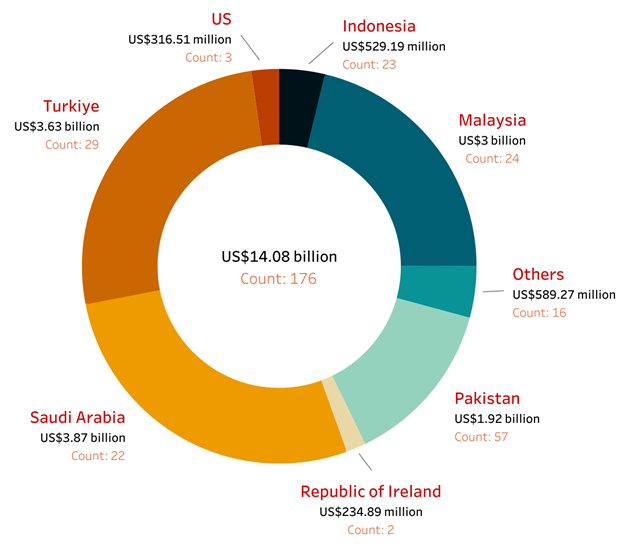
Table 1: Shariah fixed income quarter-on-quarter growth by region
| Region | Q3 2025 (AuM in US$ million) | Q4 2025 (AuM in US$ million) | Change (%) |
| Africa | 63.29 | 69.29 | 9.49 |
| Americas | 299.63 | 316.51 | 5.63 |
| Asia Pacific | 5,216.21 | 5,634.86 | 8.03 |
| Europe | 2,569.36 | 3,879.82 | 51 |
| Middle East | 4,761.36 | 4,183.58 | -12.13 |
| Grand Total | 12,909.85 | 14,084.06 | 9.1 |
Performance
The Ziraat Portfolio Amber Money Market Participation Free (TL) Fund, run by Turkiye’s Ziraat Portfoy, was the highest capitalized Shariah fixed income at the close of 2025, serving under a hedge fund structure specifically designed for qualified investors in the Turkish market.
Table 2: Largest fixed incomes funds at close of Q4 2025
| Rank | Fund name | Fund company | AuM (US$ million) |
| 1 | Ziraat Portfolio Amber Money Market Participation Free (TL) Fund | Ziraat Portfoy | 2,186.53 |
| 2 | AHAM Aiiman Income Fund | AHAM Capital Asset Management | 1,630.59 |
| 3 | Riyad SAR Diversified Trade Fund | Riyad Capital | 1,179.8 |
| 4 | Aiiman Income Extra Fund | AIIMAN Asset Management | 594.59 |
| 5 | AlJazira Saudi Riyal Murabaha Fund | Aljazira Capital | 501.93 |
| 6 | SNB Capital Diversified Saudi Riyal Fund | SNB Capital | 497.63 |
| 7 | Albilad SAR Murabaha Fund | Albilad Capital | 476.75 |
| 8 | Principal e-Cash Fund (Class A) | Principal Asset Management | 396.63 |
| 9 | Ziraat Portfolio Short-Term Rental Certificate Participation (TL) Fund | Ziraat Portfoy | 378.33 |
| 10 | Riyad SAR Trade Fund | Riyad Capital | 353.06 |
The AlJazira Saudi Riyal Murabaha Fund, managed by the bank-backed Aljazira Capital of Saudi Arabia, was the best performing Shariah fixed income vehicle worldwide between Q3 and Q4 2025. It is one of the longest-running Shariah compliant money market funds in Saudi Arabia, designed to provide high liquidity and capital preservation.
Table 3: Top performing global Shariah fixed income funds at end Q4 2025
| Rank | Fund name | Fund company | Three-months return (%) |
| 1 | AlJazira Saudi Riyal Murabaha Fund | Aljazira Capital | 4.83 |
| 2 | Lotus Halal Fixed Income Fund | Lotus Capital | 4.5 |
| 3 | Al Awwal Saudi Riyal Murabaha Fund | Al Awwal Capital | 3.18 |
| 4 | Al Jazira US Murabaha Fund | Aljazira Capital | 2.95 |
| 5 | 27four Shariah Income Fund | 27 Four Investment Managers | 2.45 |
| 6 | Majoris Sukuk Negara Indonesia | Majoris Asset Management | 2.27 |
| 7 | KISI Fixed Income Sharia | Korea Investment Management Indonesia | 2.09 |
| 8 | PRUlink Syariah Rupiah Cash & Bond Fund | Prudential Indonesia | 2 |
| 9 | Batavia Pendapatan Tetap Optimal Syariah | Batavia Prosperindo Aset Manajemen | 1.96 |
| 10 | PNM Kaffah | PNM Investment Management | 1.93 |
Outlook
Despite potential headwinds, the Islamic fixed income market remains poised for continued growth as investors increasingly seek a blend of ethical principles and financial stability.
The outlook for 2026 is bolstered by a constructive backdrop of resilient economic activity and the potential for a more favorable interest rate environment. Global Sukuk issuance reached US$193 billion in 2024, estimated to be US$265 billion in 2025, according to S&P Global Ratings.
However, the market must navigate the complexities of evolving Shariah standards and the shadow of geopolitical tensions, particularly within the Middle East and Arab world. Long-term success will ultimately hinge on the industry’s ability to standardize regulatory frameworks and capitalize on the growing convergence between Islamic finance and global ESG sustainability movements.
Restricted Access
Login to continue reading (existing subscriber)
Subscribe NOW and get:
- Gain unlimited access through all key operating platforms
- Full access to all listed Islamic funds & fund profiles
- Unlimited access to all Islamic fund managers
- Access to all exclusive articles, reports, podcasts & videos
- Complimentary access to all IFN Investor Forums
