




GCC markets reprice risk as investors lean on Shariah resilience
IFN Investor takes a dive into the GCC investment landscape as tensions escalate following the US-Israel attack on Iran, with three Shariah market participants sharing their views on short-term volatility with long-term conviction.
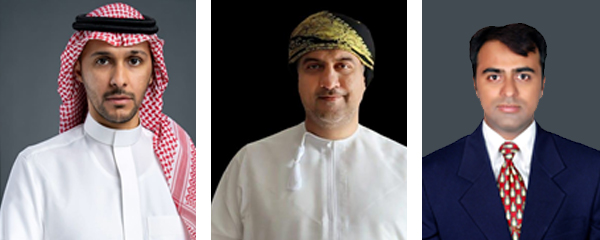
(From left: Khalid Alkrewi, head of passive investment, Albilad Capital | Ali Abdul Majeed Al Lawati, head of relationship & placements for asset management, Ahlibank | Mohammed Ishaq Ali, CEO, WinVeston Capital)
What is the initial reaction to the conflict?
Khalid Alkrewi, head of passive investment, Albilad Capital: “Foreign institutional investors pulled over US$1.5 billion from Saudi equities in the first five trading days. The largest outflow since Tadawul opened to foreigners. UAE exchanges halted trading for two days. Banking and real estate stocks were hit hardest across the region.”
Ali Abdul Majeed Al Lawati, head of relationship & placements for asset management, Ahlibank: “Generally, despite the war escalation, we did not see a major move out of money from the GCC region. This reflects investors’ wishes to further assess the circumstances or believe things may improve. The capital base in GCC countries is mainly local investment which is an advantage. Money flows to safer money markets and fixed income asset classes. Equities have trimmed in Saudi and UAE, but Oman has outperformed, driven by banking and oil and gas sectors.”
Mohammed Ishaq Ali, CEO, WinVeston Capital: “A classic flight to quality has been observed. Sukuk have shown greater resilience than conventional bonds, with yields tightening, reflecting strong demand from Islamic investors and their perception as a safe-haven. Some investors are reallocating towards global equity themes such as AI, seeking diversification away from oil-linked and geopolitically exposed markets.”
What is the feedback/investor pattern on short-term vs long-term holdings in various asset classes?
Khalid: “Add gold, US dollar and commodity-linked instruments. As oil spiked to near eight-month highs, hold energy-linked names.”
Ali: “Investors generally are short- to-medium-term focused as opposed to long-term in nature and thus are lower in risk profile. Hence the concentration in money market and fixed income as opposed to equities. Investors remain invested with a more cautious and closer eye to markets for the recent tensions in the region.”
Mohammed: “In the immediate term, investors are highly sensitive to headlines. However, companies with strong fundamentals and those unduly corrected are creating mispricing opportunities, driving reversals and retreats. The Saudi market is considered to be the most liquid and strong corporate governance regulations stand resilient among peers. Investors are demanding that companies provide clear and frequent updates on their operational exposure specifically regarding supply chain dependencies (for example, the Strait of Hormuz) and the financial sensitivity to rising costs like freight and insurance. The sharp drop in new equity, bond and Sukuk issuances also reflects a short-term ‘wait-and-see’ approach from corporate issuers.”
What are investors saying the prospects and risks will be in the medium- to long-term?
Khalid: “Notably, after the initial panic-driven pullback, TASI (Tadawul All Share Index) has already begun recovering toward pre-war levels. This is a clear signal that the market sees Saudi fundamentals as intact and the sell-off as an overreaction.”
Ali: “New flows are selective and seek safer plays, stable sectors (banks) or ones they could benefit from (oil and gas from rising oil prices), food and agro (with least impact) and defensive dividend paying names.”
Mohammed: “The medium-term outlook remains sensitive to geopolitical risks, particularly the potential escalation of conflict for a longer duration. This could trigger oil price volatility, disrupt trade and tourism, and may slow down capital flows. On the other hand, a shorter conflict would likely support a quicker recovery in investor sentiment and asset prices.”
All three agree that the GCC’s long-term story remains intact despite near-term risks.
What is your advice to investors for the short-, medium- and long-term for various GCC holdings?
Khalid: “Seasoned investors are holding. History shows markets typically recover 3-4% higher within six months of major geopolitical events. GCC Sukuk issuances (a strong US$44 billion in January and February 2026) are paused. This will create a future entry opportunity. The GCC structural story is intact. Focus on infrastructure Sukuk, renewables and healthcare. Saudi Arabia stands out as the clear regional anchor with its economic diversification, PIF-backed mega-projects and strong sovereign balance sheet.”
Ali: “Crisis creates opportunities. Each downturn unfolds discounted opportunities for long-term investment and having long-term approaches always rewards. Split investments as strategic, that have to remain invested always not to miss out on the best days ahead with examples like the global tech space and GCC financials. Go tactical for trading and timing entries or exits on global mega trends of renewable energy, traditional energy, gold mining and semiconductors. Be defensive with income play on mainly blue chips and maintain liquidity to capitalize on any lucrative opportunities arising as well as for operational needs.”
Mohammed: “Sovereign wealth firms like PIF, ADIA and QIA are playing central roles in not only stimulating long-term domestic growth, enhancing corporate earnings and deepening capital markets but also acting as countercyclical stabilizers, providing liquidity and defence during downturns. It is noted that during the periods of geopolitical stress, these funds help anchor investor confidence, mitigate capital flight and sustain long-term economic resilience. Most regional companies have the credit quality and liquidity headroom to manage these tail risks, supported by their governments.
Investors are closely monitoring structural drivers that continue to support the GCC outlook despite near-term volatility. Economic diversification remains a key pillar, with the non-oil sector contributing roughly 75% of GDP in the UAE and around 71% in Saudi Arabia, reducing reliance on hydrocarbons and enhancing earnings stability. This is reinforced by sustained sovereign-backed investments under long-term programs such as Saudi Vision 2030 and Qatar National Vision 2030, which continue to drive infrastructure development and economic activity.”
Restricted Access
Login to continue reading (existing subscriber)
Subscribe NOW and get:
- Gain unlimited access through all key operating platforms
- Full access to all listed Islamic funds & fund profiles
- Unlimited access to all Islamic fund managers
- Access to all exclusive articles, reports, podcasts & videos
- Complimentary access to all IFN Investor Forums
