




Breaking away from Sukuk – long considered the default fixed-income option for Islamic investors – this new ETF developed by Wahed Invest is structured to pursue alternative income in a manner permitted under Shariah principles, while mitigating exposure to equity market risks.
The KraneShares Wahed Alternative Income Index ETF (KWIN) aims to generate returns through Shariah compliant forward sale agreements – unlike conventional income funds that rely heavily on interest-bearing fixed-income securities.
The forward sale agreements are effected using a combination of flexible exchange options contracts on Shariah compliant stocks, providing greater liquidity through an ETF format by offering daily tradability. This strategy is designed to provide a delta-neutral outcome, meaning it is not sensitive to the direction of the underlying stock’s price.
“KWIN was created for investors who want to stay true to their faith while accessing alternative income-generating investment strategies,” said Wahed Invest CEO Mohsin Siddiqui. “We have combined rigorous Shariah screening with modern portfolio techniques to give Muslims and values-based investors a product that is both Halal and competitive in today’s markets.”
Launched on the 5th November 2025 with 100,000 units priced at US$25 each and benchmarked against the Wahed Shariah Alternative Income Index, the KWIN is managed by Krane Funds Advisors (KraneShares), a specialist in innovative, research-driven ETFs.
It is the third ETF in the Wahed product portfolio, and this fund gets option income generated through the difference between the amount received for the call option and the price paid for the put option. KWIN reinvests this option income into the fund, which may reduce the frequency of taxable distributions – conducted annually.
But by writing call options and buying put options as part of its strategy, the fund may limit its ability to benefit from increases in the value of its holdings above the options’ strike prices, while still being exposed to declines in value. KWIN can invest only non-dividend paying equity securities, which must be listed on the NYSE, NASDAQ or CBOE.
Table 1: Differences between KWIN and Sukuk offerings
| KWIN option strategy | Sukuk | |
| Income Generation | Generates steady, fixed-term option income by capturing premium spreads in liquid equity options markets | Offers regular profit payments (analogous to coupons), tied to asset performance |
| Liquidity | Underlying equities and options trade on public exchanges, with transparent pricing and frequent rebalancing | Secondary Sukuk markets can be thin, with many investors holding to maturity; may face wider bid-ask spreads, higher trading costs and less price transparency |
| Yield / return | Potentially higher, especially in low-rate or sideways markets; ability to respond dynamically in volatile environments | Generally stable but may offer lower yields, especially in investment-grade portfolios; returns depend on underlying asset and market rates |
| Transparency and cost | Transparent exposures, daily NAV, typically lower management fees than active Sukuk funds | Fees for Sukuk funds are higher due to complex legal structuring; limited number of passive ETF options available and geographic concentration |
| Complexity / access | Institutional strategy made accessible via ETFs; can be difficult and costly for individuals to implement directly | Easy for individuals to access through funds, but choice remains limited and portfolio diversification can be constrained |
| Shariah compliance | Fully compliant: Strategy and universe pre-screened; avoids Riba and non-compliant income sources in ETF wrapper | Fully compliant: Asset-backed, no Riba; long regulatory and scholarly acceptance |
Source: KraneShares & Wahed Invest
The fund may invest up to 20% of its assets in instruments that are not included in the underlying index, but which are compatible with Shariah investment principles.
Chart 1: KWIN investments by sector
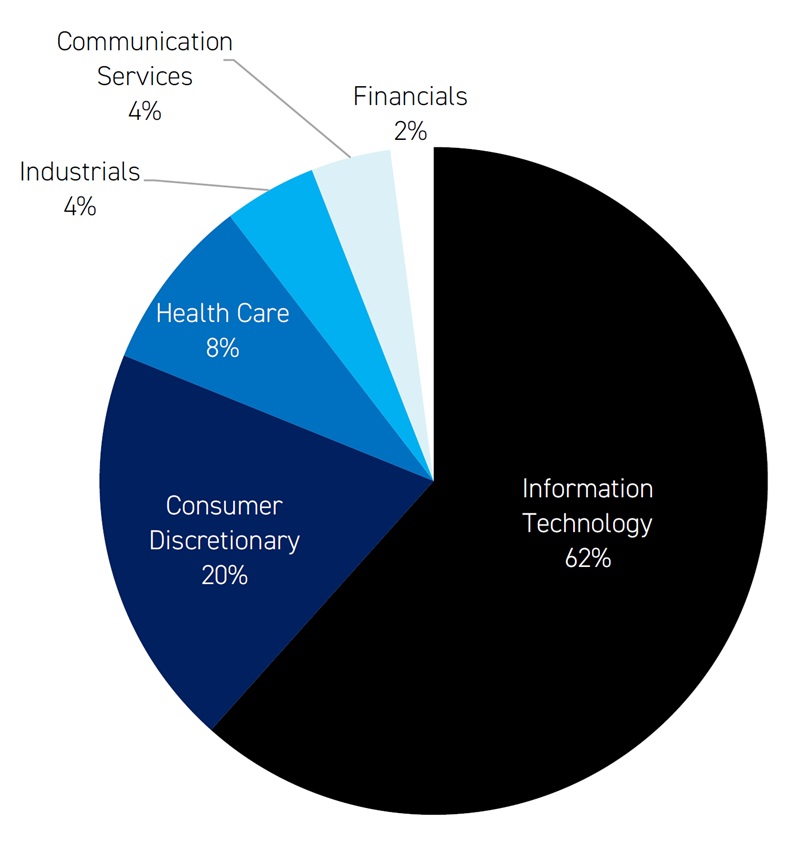
Source: KraneShares & Wahed Invest
KWIN remains subject to other risks including larger price movements, changes in volatility, time decay and other market factors as unusual market conditions or trading suspensions may reduce the effectiveness of the fund’s options strategies. Also, this fund may invest in derivatives, which are often more volatile than other investments and may magnify potential gains or losses.
KraneShares COO Jonathan Shelon said: “We are proud to integrate Wahed’s global expertise and particular focus on the needs of Middle Eastern investors into KWIN, and to provide an alternative income stream that we believe will resonate in today’s uncertain market environment.”
*Disclaimer: The opinions and viewpoints expressed in this Fund Profile do not constitute as recommendations for any funds highlighted. The information presented is not investment advice and should not be treated as such.
| KraneShares Wahed Alternative Income Index ETF | |
| Fund manager | Krane Funds Advisors |
| Launch date | 5th November 2025 |
| Asset class | ETF |
| Base currency | US dollar (USD) |
| Initial units on offer | 100,000 |
| Unit price | US$25 |
| Investment objective | To generate steady, alternative option income by capturing option premium spreads through a short call and long put position in a Shariah compliant investment strategy |
| Benchmark | Wahed Shariah Alternative Income Index |
| Risk profile | High |
| Distribution | Annual |
| Management fee | 0.5% |
