




- Total AuM of US$167.57 billion across 99 global funds
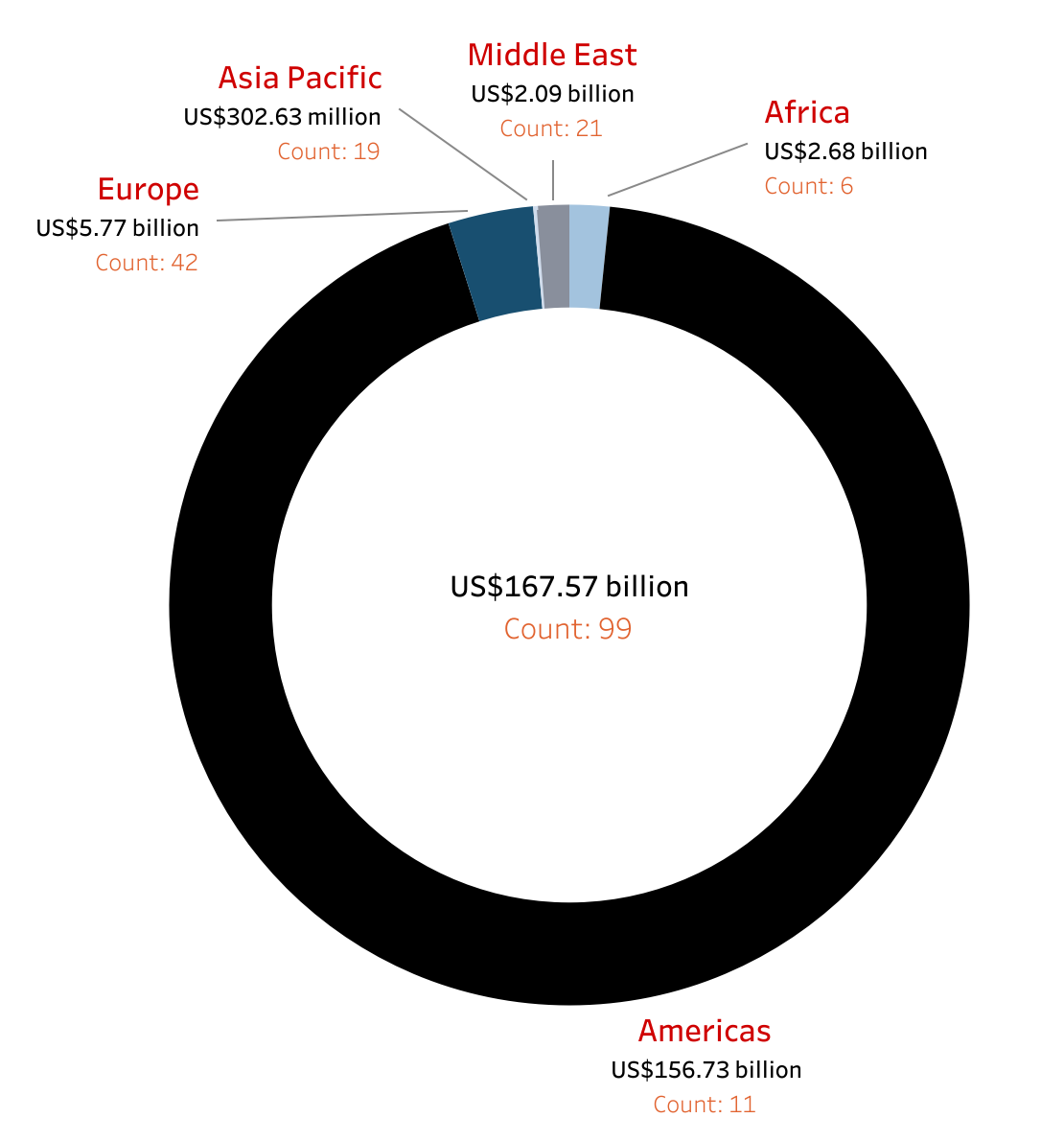
- Americas top region with US$156.73 billion total
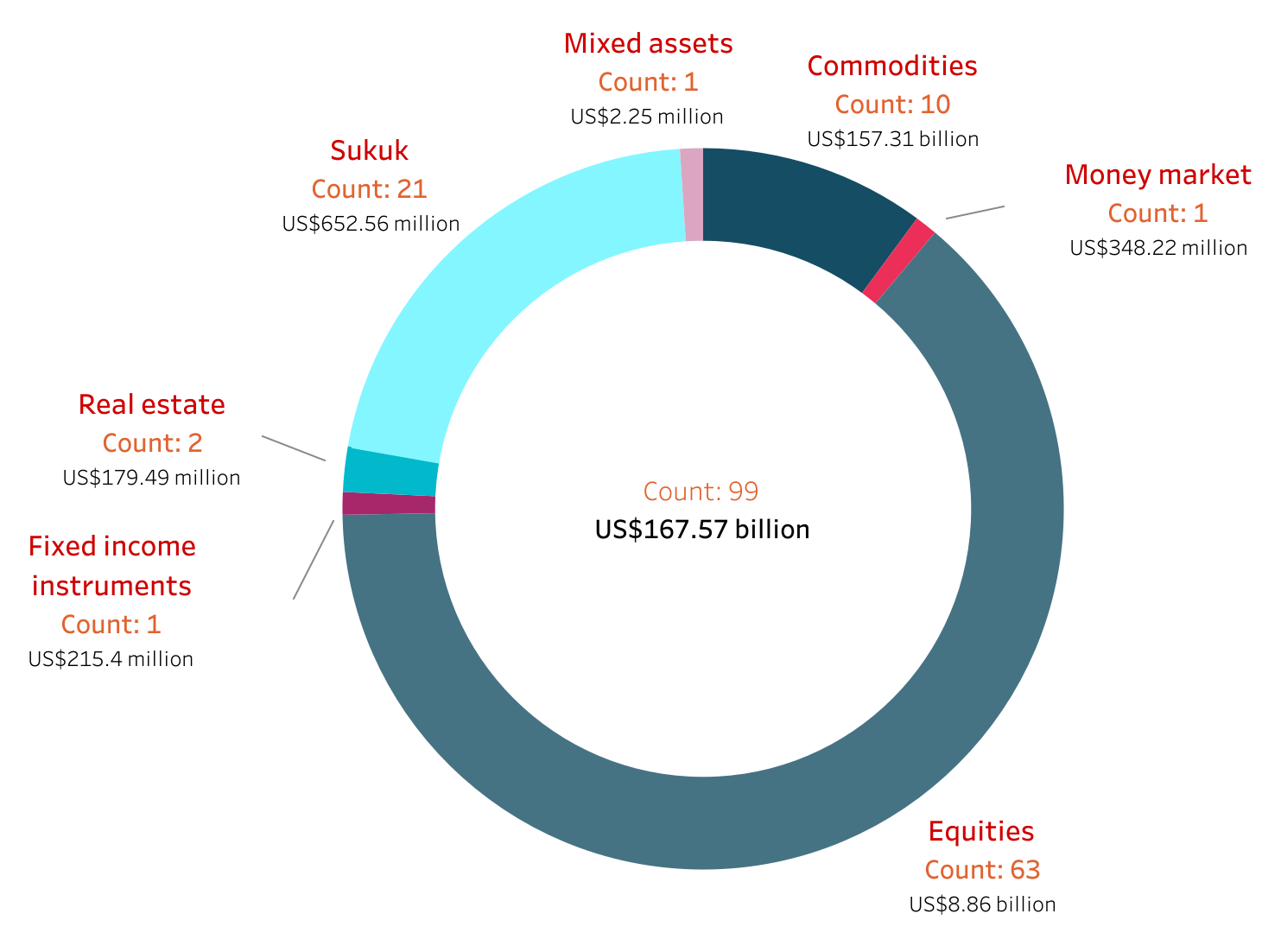
- Equities lead in asset class with 63 funds
The Shariah compliant ETF sector is demonstrating a significant growth trajectory as global demand for ethical, values-based investment vehicles continues to intensify across various international financial markets.
This market has evolved into a sophisticated segment of the financial landscape, as the S&P Dow Jones Indices reports that Shariah benchmarks outperformed conventional indices in late 2025, with Shariah variants gaining 3.6% compared to 2.7% for standard indices.
This performance advantage stems partly from heavy ETF weightings in IT and healthcare – sectors deemed permissible under Islamic law that also align with ESG-conscious trends.
Fitch Ratings highlights that the integration of ESG criteria is accelerating. This trend directly benefits Sukuk ETFs, which offer ethical fixed-income alternatives by rigorously screening out impermissible activities like gambling or interest-based services.
Regional performance and market leaders
The global Shariah ETF market has reached a substantial valuation of US$167.57 billion across 99 funds by Q3 2025, as tracked by the IFN Investor Funds Database.
Regional leadership is shifting as American capital markets scale while the Middle East and Southeast Asia implement aggressive regulatory and digital transformation strategies.
The Americas commands the largest share of the pie, accounting for US$156.73 billion in assets despite hosting only 11 funds, reflecting a high concentration of high-value investment vehicles – as commodities had outperformed equities.
The US and Canada together account for the vast majority of the AuM in the space due to several structural advantages that include:
- The shift from mutual funds to ETFs due to tax efficiency and lower costs.
- Upscaling with 1,100 US launches and $700 billion inflows in Canada in 2025.
- Active ETF management that outmoded passive, index-tracking products.
- Innovation, as young, tech-savvy investors focus on digital wealth building.
In the Shariah ETF space, Canada is the pioneer, having launched the world’s first such vehicle, WSHR, in 1990. This success has encouraged a wave of new listings on the Toronto and Nasdaq exchanges to serve the US$186 billion North American Muslim consumer market.
The 1.5-million-strong Canadian Muslim population is a primary market driver, with major institutions like RBC and Wealthsimple offering dedicated Halal options unavailable just a decade ago. Wahed, another market maker for Shariah ETFs in Canada, has also democratized access to Halal investing through user-friendly digital platforms.
US-domiciled Shariah ETFs such as SPUS and HLAL have, meanwhile, significantly outperformed conventional benchmarks, attracting interest from non-Muslim ethical investors. The US stock market also contains a high concentration of technology and healthcare stocks, which naturally pass Shariah screens more easily than European banks.
Outside of North America, Europe maintains the world's second-largest share of the Shariah ETF market, with AuM of US$5.77 billion, by leveraging the UCITS framework which provides a gold-standard regulatory seal for cross-border distribution.
Ireland and Luxembourg dominate this landscape, with Ireland alone hosting 78% of all European ETF assets, totaling approximately €1.8 trillion as of late 2025. This centralized hub allows global asset managers to efficiently reach millions of diverse investors across the European Union and international markets like Asia and Latin America.
Africa shows significant growth with six funds totaling US$2.68 billion in assets. The Middle East comprises 21 funds with US$2.09 billion, trailing despite being the historical center of Islamic finance. Asia Pacific has 19 funds managing US$302.63 million.
Chart 1: Shariah ETFs by region, fund count and AuM
Asset allocation and market composition
There is an interesting dichotomy when delving into this analysis – where equities remain the foundational asset class for the Shariah ETF industry, representing 63 funds with a combined value of US$8.86 billion.
However, commodities have emerged as a massive driver of total valuation, currently accounting for US$157.31 billion in assets despite having only 10 funds. This is mainly due to the surge in the price of gold, which forms the bulk of Shariah commodity fund holdings.
Sukuk provides a significant ethical alternative for fixed-income investors with 21 funds totaling US$652.56 million.
Other asset classes include money markets (US$348.22 million; one fund), fixed income (US$215.4 million; one fund), real estate (US$179.49 million; two funds) and mixed assets (US$2.25 million).
Chart 2: Shariah ETFs by asset class, fund count and AuM
Quarterly expansion trends
The Shariah compliant ETF market experienced robust growth across all global regions between the second and third quarters of 2025, with total assets significantly outpacing previous annual figures.
The Americas recorded the highest absolute increase, surging from US$121.53 billion in Q2 to US$156.73 billion by the end of Q3 for a 28.96% expansion – powered mainly by the surging gold price boost to commodity funds.
Other regions showed double-digit growth too:
- Europe: Maintained strong secondary growth with a US$1.26 billion, or 27.89%, quarterly rise in total managed assets, which also included gold holdings.
- Middle East: Recorded 18.03% growth, bringing its regional total to US$2.09 billion by the end of September.
- Asia Pacific: Demonstrated resilient expansion with a 16.06% rise, although its total volume remains modest at US$302.63 million.
- Africa: Posted steady gains of 1.93%, ending the quarter with a total asset valuation of US$2.68 billion.
Table 1: Shariah ETF growth by quarter
| Region | Q2 AuM (US$ million) | Q3 AuM (US$ million) | Quarter-on-quarter % change |
| Americas | 121,529.14 | 156,725.8 | 28.96 |
| Europe | 4,524.17 | 5,786.11 | 27.89 |
| Middle East | 1,770.64 | 2,089.82 | 18.03 |
| Asia Pacific | 260.75 | 302.63 | 16.06 |
| Africa | 2,627.41 | 2,678.04 | 1.93 |
Largest Shariah ETFs
The SPDR Gold Shares ETF is the largest Shariah compliant ETF globally, with AuM reaching US$129.96 billion. This massive valuation places it at the forefront of the US$167.57 billion Shariah ETF market, far exceeding the size of leading equity-based Islamic funds.
Unlike synthetic ETFs that use prohibited derivatives or interest-bearing instruments, the SPDR holds 100% of its assets in physical gold bullion stored in secure vaults.
Gold’s high liquidity and role as a "safe haven" asset during periods of high inflation makes it a strategic hold as well for Muslim investors. While other gold ETFs exist, SPDR also benefits from its massive scale on the NYSE Arca, providing the tightest bid-ask spreads for institutional-grade ethical portfolios.
Table 2: Largest Shariah ETFs by AuM
| Rank | Fund | Manager | Asset class | AuM (US$ billion) |
| 1 | SPDR Gold Shares ETF | State Street Global Advisors | Commodities | 129.96 |
| 2 | SPDR Gold MiniShares Trust | State Street Global Advisors | Commodities | 22.22 |
| 3 | NewGold ETF | Absa Bank | Commodities | 2.18 |
| 4 | SP Funds S&P 500 Sharia Industry Exclusions ETF | ShariaPortfolio | Equities | 1.81 |
| 5 | Ziraat Portfolio Gold Participation Exchange Investment Fund | Ziraat Portfoy | Commodities | 1.62 |
Top performing Shariah ETFs
The VP-DJ Shariah China A-Shares 100 ETF emerged as the top performing Shariah ETF with a three-month return of 36.84%.
A significant player within the equities asset class, the fund follows a trend seen in other China-focused equity plats, such as the Chimera S&P China HK Shariah ETF, which led the market earlier in 2025.
The success of China-centric Shariah ETFs highlights the growing importance of the Asia Pacific region, which currently hosts 19 funds. Although the Americas and Europe command higher total asset valuations, the high returns from A-Share focused funds suggest an increasing sophistication in how Shariah investors approach emerging market volatility.
Table 3: Top performing Shariah ETFs
| Rank | Fund | Manager | Asset class | Three-month returns (%) |
| 1 | VP-DJ Shariah China A-Shares 100 ETF | Value Partners Asset Management | Equities | 36.84 |
| 2 | NewGold ETF | Absa Bank | Commodities | 23.71 |
| 3 | Chimera S&P China HK Shariah ETF - Income | Lunate Capital | Equities | 19.53 |
| 4 | Chimera S&P Turkey Shariah ETF - Income | Lunate Capital | Equities | 19.38 |
| 5 | SPDR Gold MiniShares Trust | State Street Global Advisors | Commodities | 16.33 |
Outlook
The trajectory for Shariah compliant ETFs remains robust as the broader Islamic finance market enters a high-growth phase. Analytics firm Mordor Intelligence projects an 11.56% compound annual growth rate through 2031, supported by national policies in the Middle East and Southeast Asia. This expansion is increasingly driven by a global shift toward ethical, asset-backed investment vehicles that align with modern ESG mandates.
Technological integration will serve as a primary catalyst for market accessibility and operational transparency in the coming years. The rise of AI-driven Shariah auditing and digital distribution channels in Malaysia and the UAE is expected to lower entry barriers for retail investors. These innovations streamline the complex screening processes required to maintain the rigorous standards of Islamic jurisprudence.
Institutional consolidation is likely to intensify as large-scale funds in the Americas and Europe continue to attract significant capital. While equities provide targeted market access, physically backed commodity ETFs like the SPDR Gold Shares remain foundational for liquidity and stability. This dual demand for growth and capital preservation ensures a diversified product pipeline for both institutional and individual portfolios.
Despite the positive outlook, the sector must navigate challenges regarding regulatory harmonization and fragmented Shariah interpretations across different jurisdictions. Standardizing compliance frameworks will be essential to foster cross-border liquidity and reduce the operational costs associated with specialized fund management. Overcoming these hurdles will solidify the position of Shariah ETFs within the mainstream global financial ecosystem.
Restricted Access
Login to continue reading (existing subscriber)
Subscribe NOW and get:
- Gain unlimited access through all key operating platforms
- Full access to all listed Islamic funds & fund profiles
- Unlimited access to all Islamic fund managers
- Access to all exclusive articles, reports, podcasts & videos
- Complimentary access to all IFN Investor Forums
